
At Cryosonic, we provide a safe solution for the removal of seborrhoeic keratoses – a common, harmless growth frequently associated with ageing.
It’s not dangerous, but many people opt to have the lesions removed for cosmetic or comfort purposes, should they become irritated.
With state-of-the-art cryotherapy technology, we can specifically target and eliminate the growth in a fast, painless treatment with minimal downtime.
Whether it’s an aesthetic issue or you want Seborrhoeic Keratosis Removal, we’re here to help you feel comfortable in your skin once again.
Seborrhoeic keratosis (often inappropriately referred to as ‘senile warts’ or ‘barnacles of ageing’) is a non-dangerous, non-infectious, and non-contagious epidermal tumour that emerges in early adulthood to middle age.
They can crop up anywhere on the body — often on the chest, back, face or shoulders — and come in a range of colours from light brown to black.
They can appear “stuck on” the skin, and some may feel slightly rough or waxy.
Although such growths are benign medically, they sometimes can be irritating.
They can snag in clothing, be itchy, or make you feel self-conscious — especially if they appear in noticeable places, such as the face or neck.
At Cryosonic, we see people who want seborrhoeic keratosis removal so they feel good about themselves and, for some reason, look and feel younger.
For some, it’s simply about avoiding irritation or eliminating any mistaken identity between these growths and more serious skin issues. Whatever your motivation, removing them is easy, safe and can make a big difference in how you feel.
Is It Safe to Leave Seborrhoeic Keratosis Untreated?
Yes—seborrhoeic keratosis is completely benign, meaning it's not cancerous and doesn’t pose a health risk.
However, if the growth changes suddenly, bleeds, or becomes painful, it’s always a good idea to have it checked by a professional, just to rule out other conditions.
Most clients describe the procedure as slightly uncomfortable rather than painful.
You might feel a quick stinging or cold sensation during treatment, similar to having a small area of skin sprayed with something cold—because that’s exactly what cryotherapy does. The discomfort is brief, and there's no need for anaesthetic.
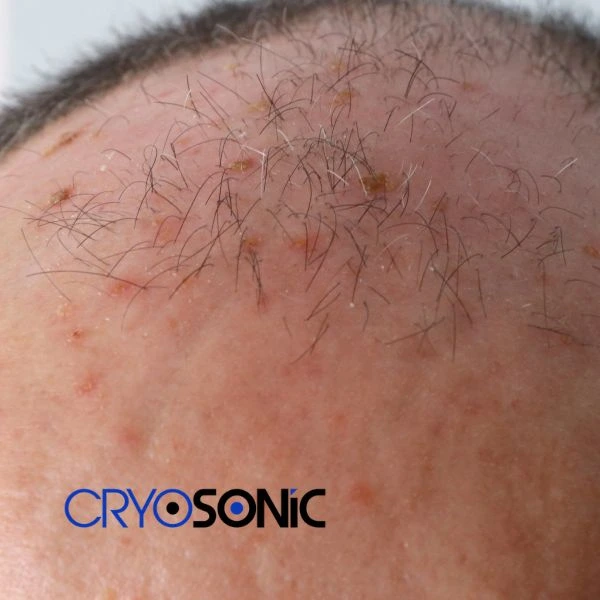
The treated skin will probably turn darker and scab after the procedure, potentially within a few days. This is absolutely normal and part of the healing.
And 1 to 2 weeks later, the scab falls off, leaving clearer, smoother skin below. You may need a second treatment in some cases, particularly for thicker growths, but most clients see great results after a single round.
The results are not permanent; existing seborrhoeic keratoses will not recur, but they may appear elsewhere. But new ones can develop, especially as we get older, so it’s possible that more treatments can be required for other sites in the future.

Taking care of the treated area after removal is important to ensure smooth healing and reduce any chance of scarring.
Here are a few simple tips we recommend at Cryosonic:
Most people heal beautifully without any noticeable marks. If you have a history of scarring or sensitive skin, just let us know—we’ll provide tailored advice to support your recovery.
Getting ready for seborrhoeic keratosis removal at Cryosonic is simple, but a few steps can make the process smoother:
We aim to make your experience as stress-free and informative as possible. Once you’re in, we’ll assess the area, explain the process, and treat if you’re ready—all in one visit.
What is a seborrhoeic keratosis?
Seborrheic keratosis is a benign outgrowth commonly found on the skin and usually appears as Brown, black, or tan raised lesions. They are particularly common with age and can develop on the face, neck, chest, back, and other areas of the body.
Is seborrhoeic keratosis dangerous?
No. Seborrhoeic keratoses are benign skin growths and do not become cancerous. However, some skin cancers can resemble seborrhoeic keratoses, which is why a qualified practitioner should assess any new, changing, or unusual lesion before treatment.
Can seborrhoeic keratosis be removed?
Yes. Seborrhoeic keratoses can be removed for cosmetic reasons or if they become irritated, itchy, catch on clothing, or bleed. Cryotherapy is one of the most widely used and effective treatment options.
How does cryotherapy remove seborrhoeic keratosis?
Cryotherapy works by freezing the unwanted tissue. The extreme cold destroys the cells within the lesion, causing it to dry out and gradually fall away while healthy surrounding skin remains largely unaffected.
Is cryotherapy painful?
Most patients tolerate cryotherapy very well. You may experience a brief stinging, cold, or burning sensation during treatment, but the procedure is usually quick and requires little or no downtime.
How Many Treatments Will I Need?
A single treatment is very effective in many seborrhoeic keratoses. Thicker, larger, or more stubborn lesions may require additional sessions to yield satisfactory results.
What happens after treatment?
The area may become red, slightly swollen or develop a small scab or blister after treatment. That is natural in the healing process. Over the next days/weeks, the treated lesion generally becomes darker, dries and sloughs off.
To what extent does it need healing?
The size and topography of the lesion also influence healing times. The majority of patients improve substantially within 1–4 weeks, although larger lesions may take longer to heal completely.
Will the seborrhoeic keratosis come back?
A treated seborrhoeic keratosis usually does not return. However, because these growths are common and often age-related, new seborrhoeic keratoses may develop elsewhere on the body over time.
Will there be a scar?
Cryotherapy is designed to minimise scarring. In most cases, little to no visible scarring occurs. As with any skin treatment, results vary depending on lesion size, skin type, healing response, and aftercare.
Can seborrhoeic keratosis be removed from the face?
Yes. Cryotherapy is often used for facial seborrhoeic keratoses. During your consultation, we assess the lesion’s size, depth, and location to determine whether cryotherapy is the most appropriate treatment.
Are seborrhoeic keratoses contagious?
No. A virus does not cause seborrheic keratoses and cannot be spread from person to person through contact.
How do I know if my skin lesion is a seborrhoeic keratosis?
Although seborrhoeic keratoses have a distinctive appearance, other skin conditions can look similar. A professional assessment is recommended to confirm the diagnosis before treatment.
Who is a suitable candidate for treatment?
Most healthy adults with confirmed seborrhoeic keratoses are suitable candidates for cryotherapy treatment. A consultation will help determine whether the lesion is appropriate for treatment and whether any alternative options should be considered.
How much does seborrhoeic keratosis removal cost?
The cost depends on factors such as the number of lesions being treated, their size, and their location. We provide a personalised quotation during your consultation so you know exactly what to expect.
Why choose Cryosonic to remove your seborrhoeic keratosis?
Cryosonic provides targeted cryotherapy solutions and services to remove unwanted skin lesions in a fast, safe and effective manner. Our experts extensively evaluate every lesion before treatment, and aftercare advice is given based on data supporting good healing outcomes.